Two more medieval churches – St George’s at Edworth, and a longstanding favourite, St Mary Magdalene at Caldecote. Both are isolated and long bereft of parishioners, maintained by charitable bodies but open to visitors. Each is a minor jewel. Edworth is particularly fine with its remaining stained windows and carved pews while Caldecote’s charm is rustic.
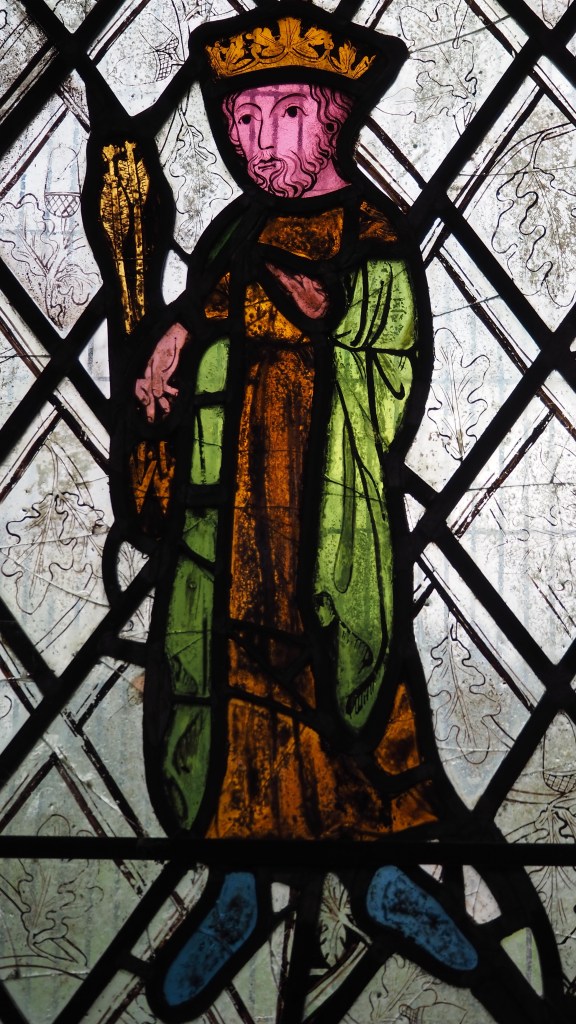
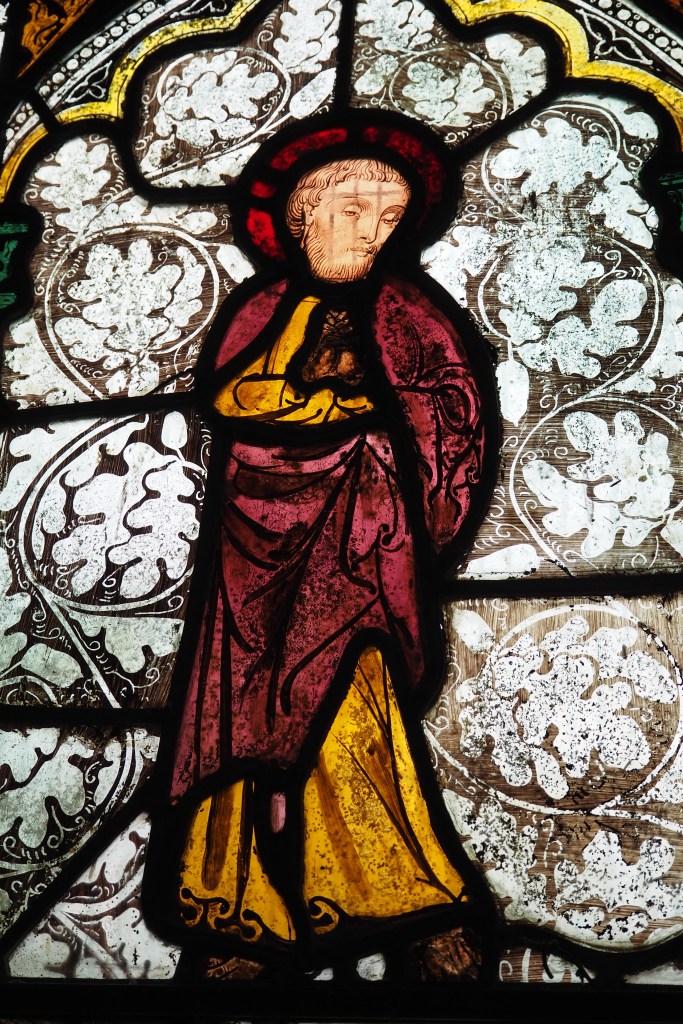
The figure of St Edmund – Saxon king of East Anglia and original patron saint of England – and another saint at Edworth date from the 14th century. Each is surrounded by motifs of leaves and acorns of English oaks, rooting the subjects to the land.

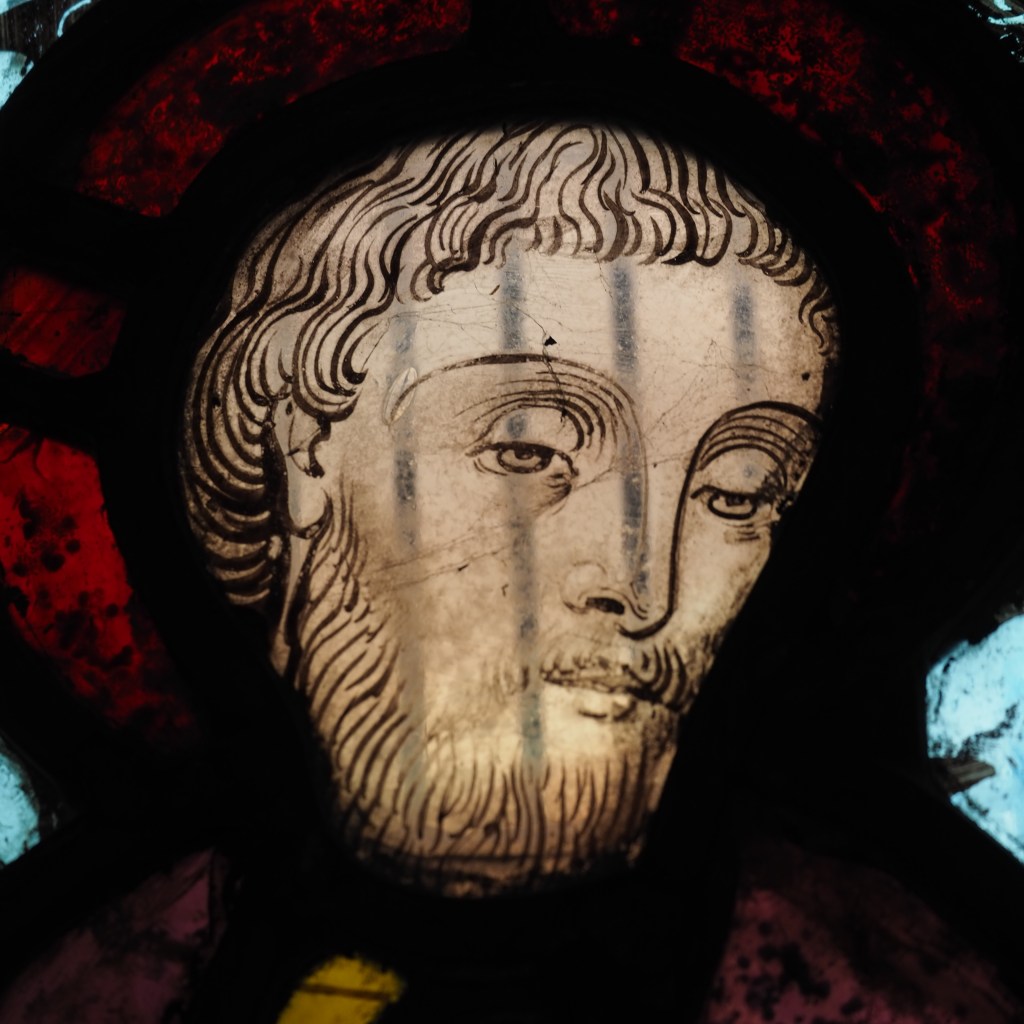
The faces are astounding, particularly that of the saint on the right, so few lines conveying so much weight of character. Edmund’s crown also looks to be of oak leaves. I would like to think this is the artist tying him to England in an implied contrast to the post-Norman monarchy of the day.
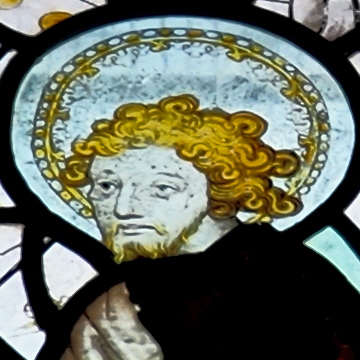
High up in the triforium is a 15th century depiction of St James, again depicted with a face of simplicity and depth but all the more wonderful for being scarcely perceptible to the naked eye, this photograph having been taken with a modest zoom lens and enlarged on editing.
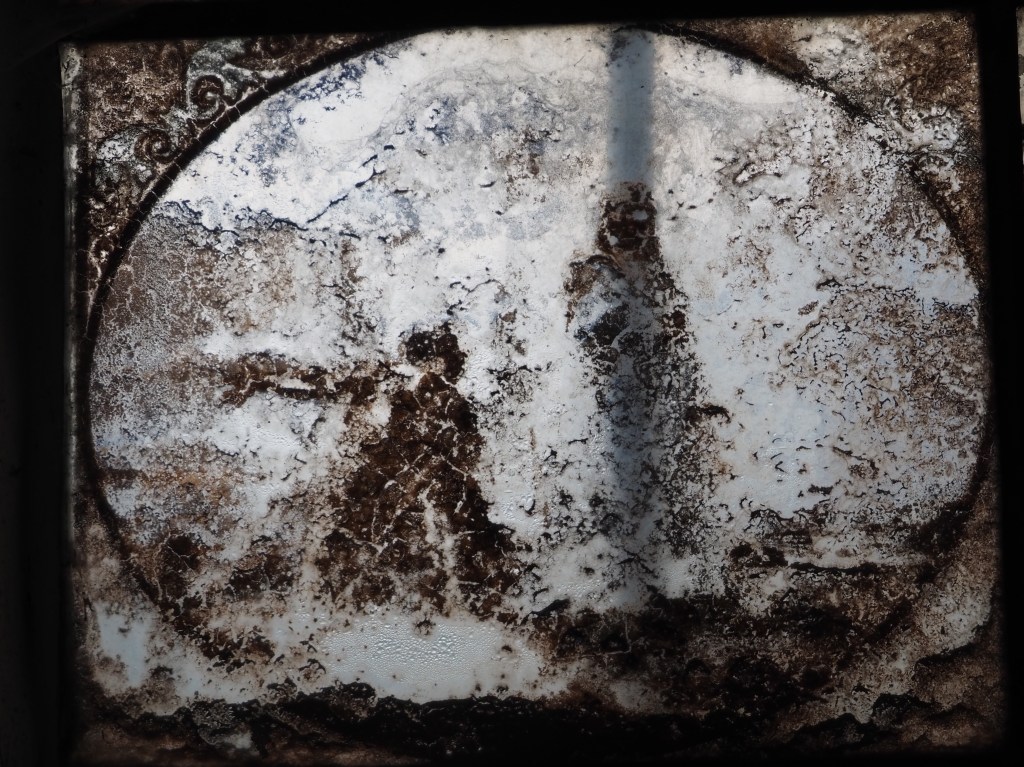
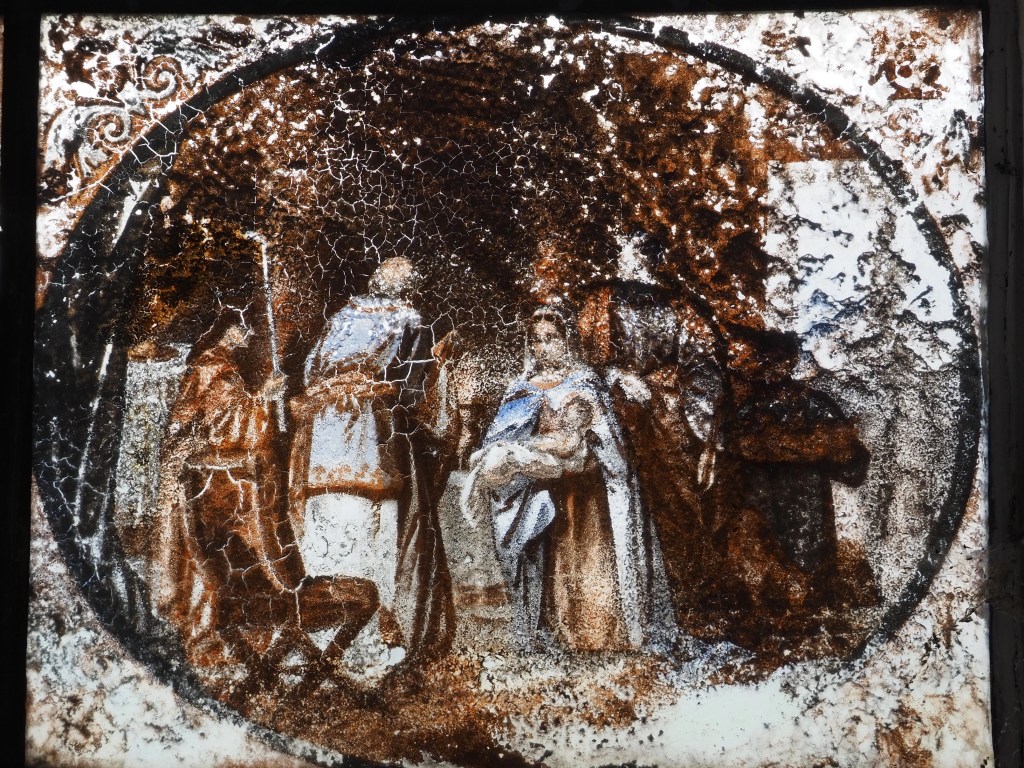
The ghosts of post-reformation glasswork at Edworth
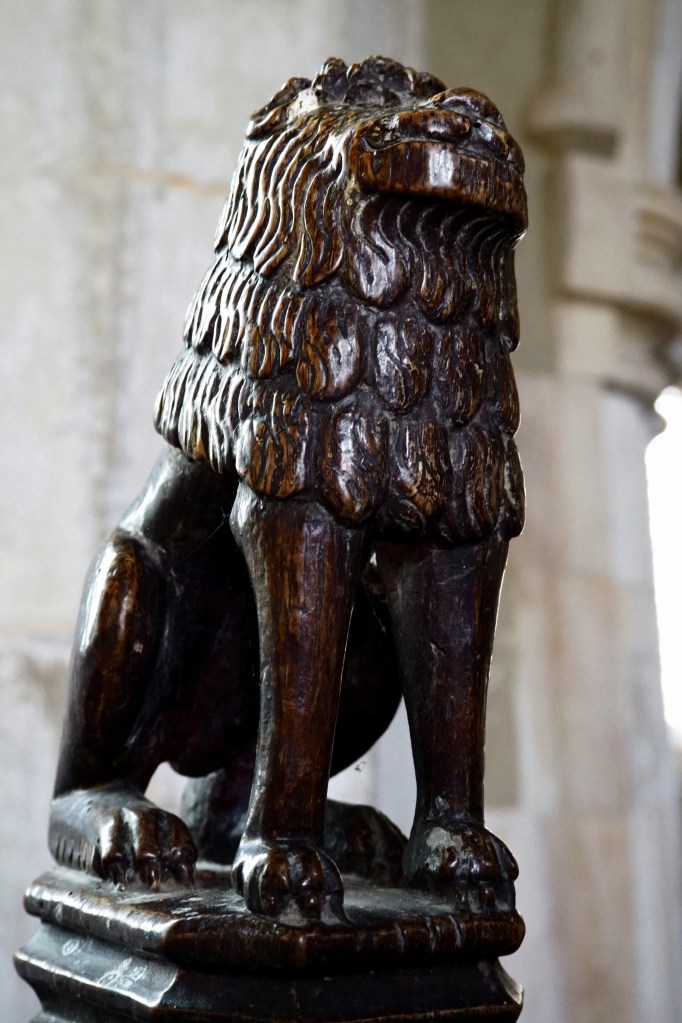
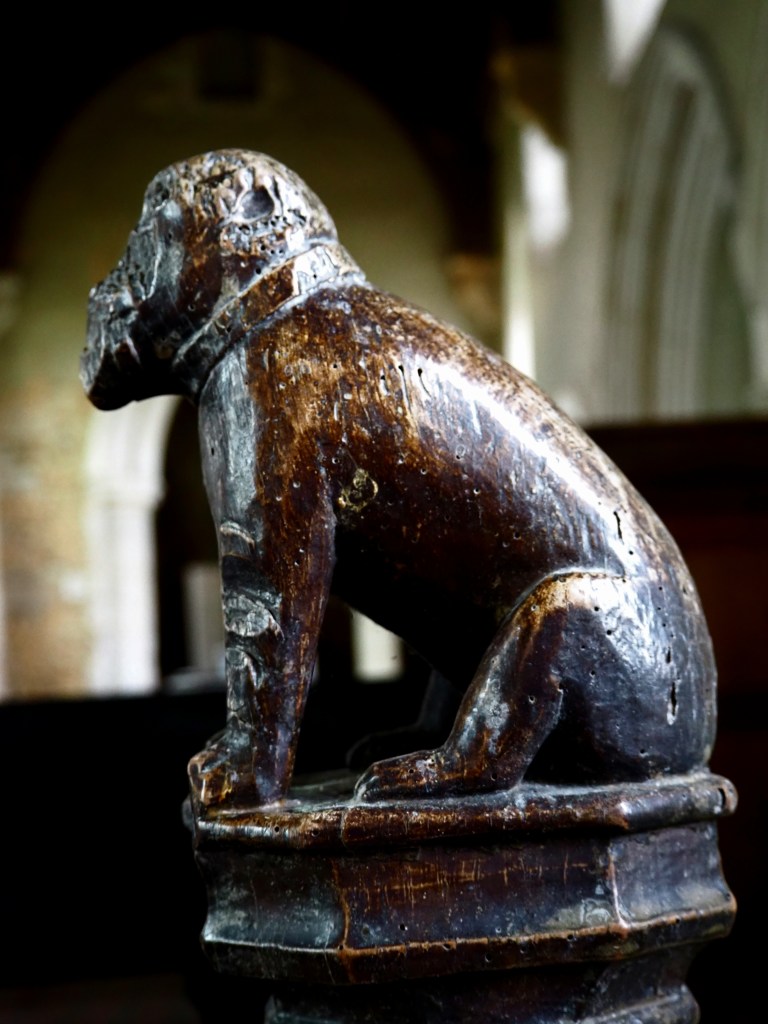
Still at Edworth, finials on the 15th century pews depict a lion and a baboon, animals never seen by the craftsmen who carved them.
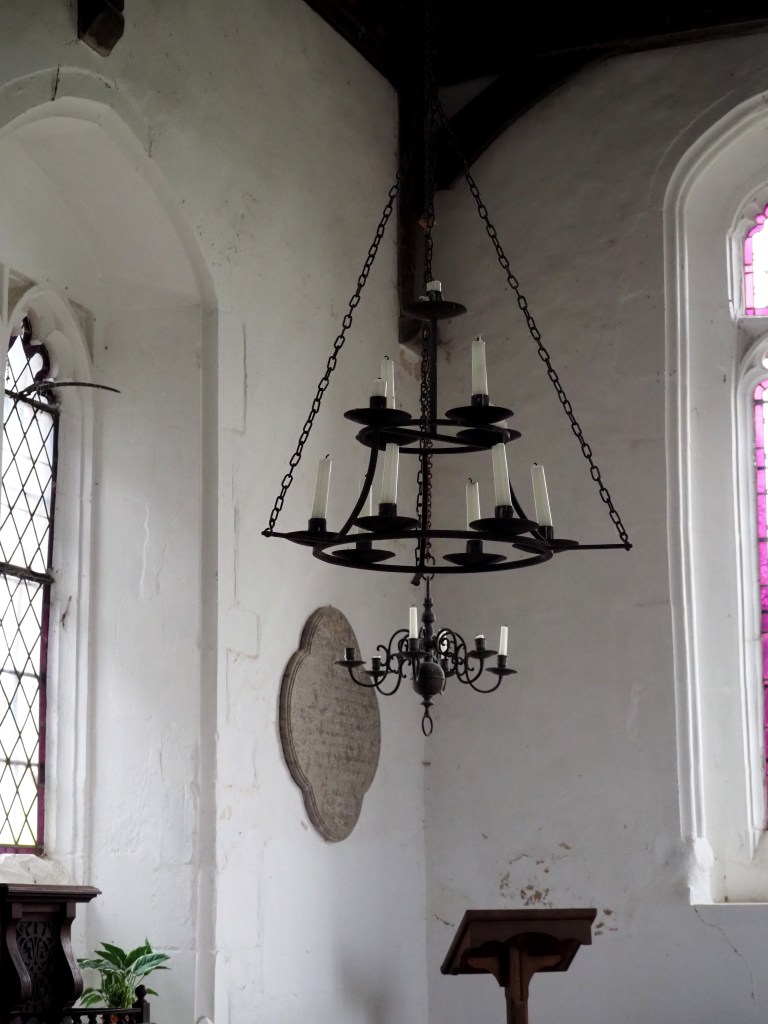
Most of Caldecote is from the 14th century although a church may have been on the site several centuries earlier.
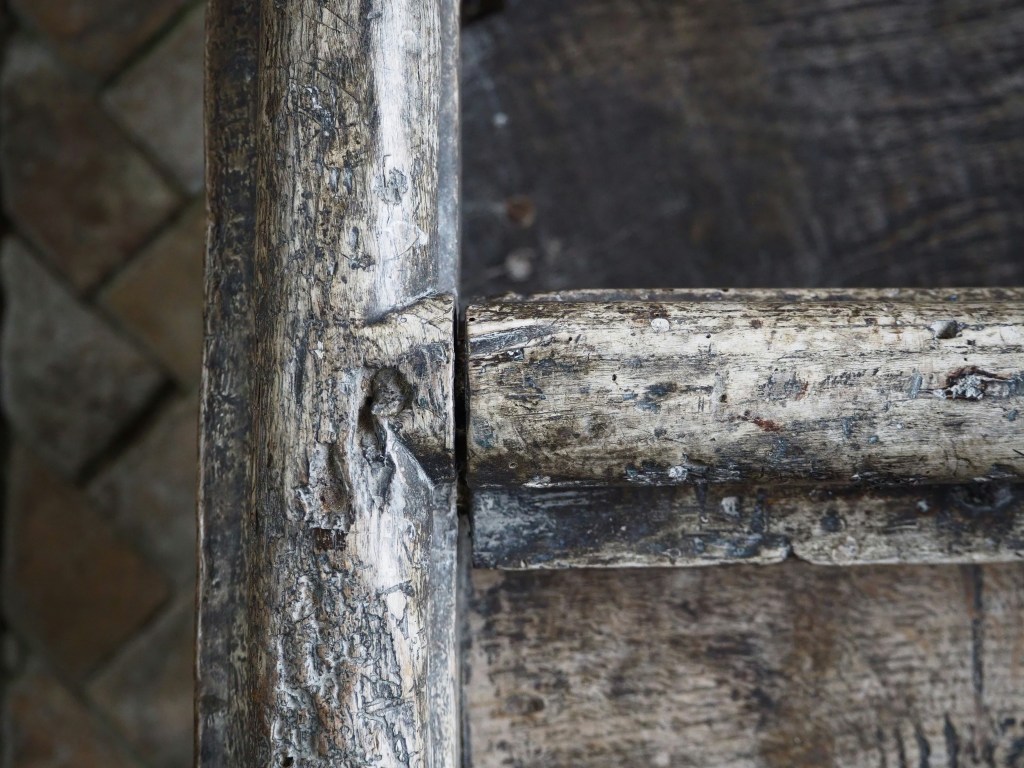
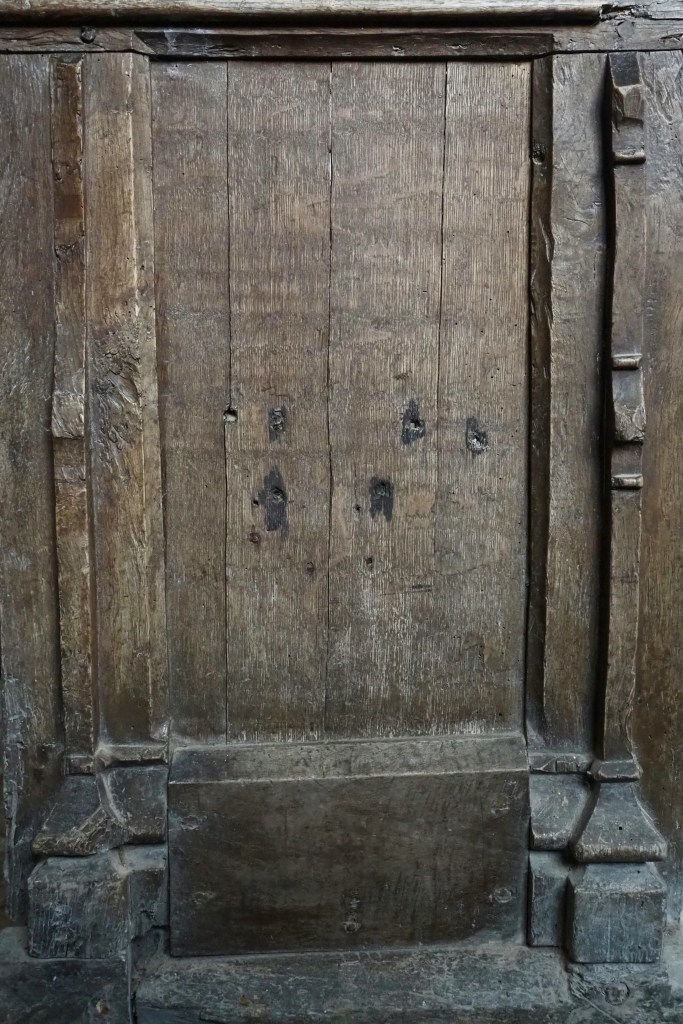
The simplicity of the 15th century pews, which retain carpenters’ markings to guide their assembly, echoes the simplicity of the building, inside and out. They are worn and rubbed smooth by the hands of seven centuries.
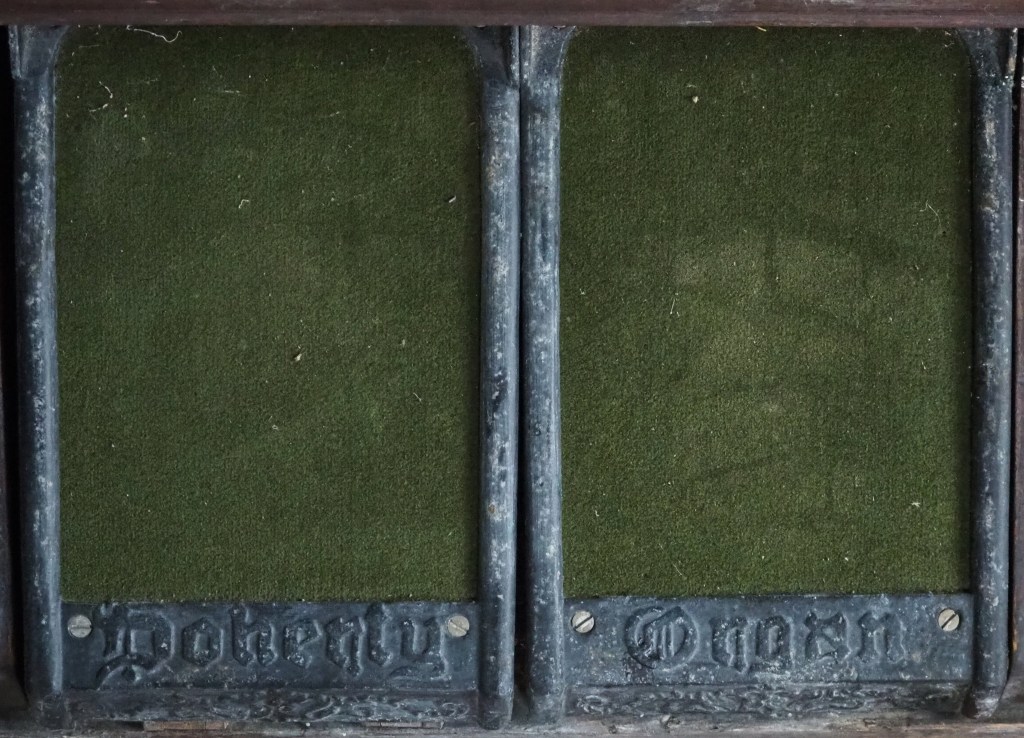
The pedals of the Doherty organ at Caldecote. No longer functional, the organ may be the most exotic item in the church, Doherty’s being a Canadian organ maker of the 19th and early 20th centuries.
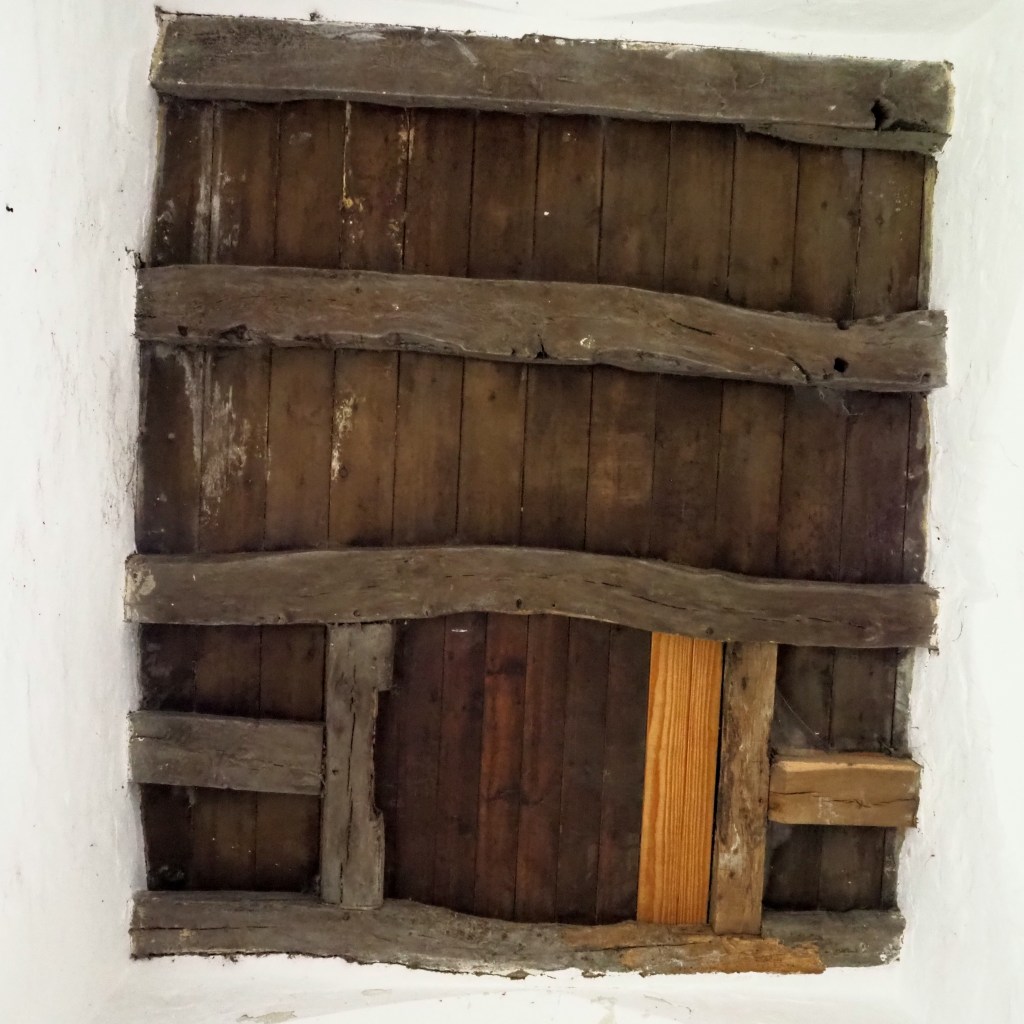
The underside of the organ loft at Caldecote, like that at Lower Gravenhurst (see previous post) is a candidate for a painting by Sean Scully.
 Walsworthblog